Resposta rápida
Os gráficos normalmente mostram apenas o preço Bid, enquanto as operações são fechadas utilizando o preço real de execução no mercado, que pode variar devido à liquidez e ao slippage. É por isso que o preço executado pode ser diferente do que vê no gráfico.
Este vídeo explica porque é que o preço apresentado no gráfico pode ser ligeiramente diferente do preço real de fecho da operação. Mostra como os preços Bid e Ask, a liquidez do mercado e o slippage afetam a execução em tempo real.
Que preço o gráfico realmente mostra
A maioria dos gráficos de negociação mostra apenas um preço — o preço Bid.
Porque é que só o Bid é mostrado
O preço Bid é utilizado porque:
- reflete o principal movimento do mercado
- mantém os gráficos visualmente limpos
- representa o melhor preço de venda nesse momento
No entanto, a negociação real envolve sempre tanto o Bid como o Ask.
Como as operações são realmente fechadas no mercado
Quando fecha uma operação:
- As posições de compra (Buy) fecham ao preço Bid
- As posições de venda (Sell) fecham ao preço Ask
Isto significa que o seu preço de fecho depende da liquidez atual do mercado, e não apenas da linha única do gráfico.
O que é o slippage e porque acontece
O slippage explicado de forma simples
O slippage acontece quando:
- o mercado se move rapidamente
- a liquidez muda
- o preço disponível é atualizado antes de a execução ser concluída
A sua ordem é executada ao melhor preço de mercado disponível, e não ao último tick visível.
Quando o slippage é mais comum
- durante a divulgação de notícias
- na abertura/fecho do mercado
- em horários de baixa liquidez
- em períodos de alta volatilidade
Porque é que o preço do gráfico e o preço de execução nem sempre coincidem
Porque:
- os gráficos mostram apenas o Bid
- a execução utiliza preços de mercado em tempo real
- os spreads e a liquidez mudam constantemente
Esta diferença é uma parte normal da negociação no mercado.
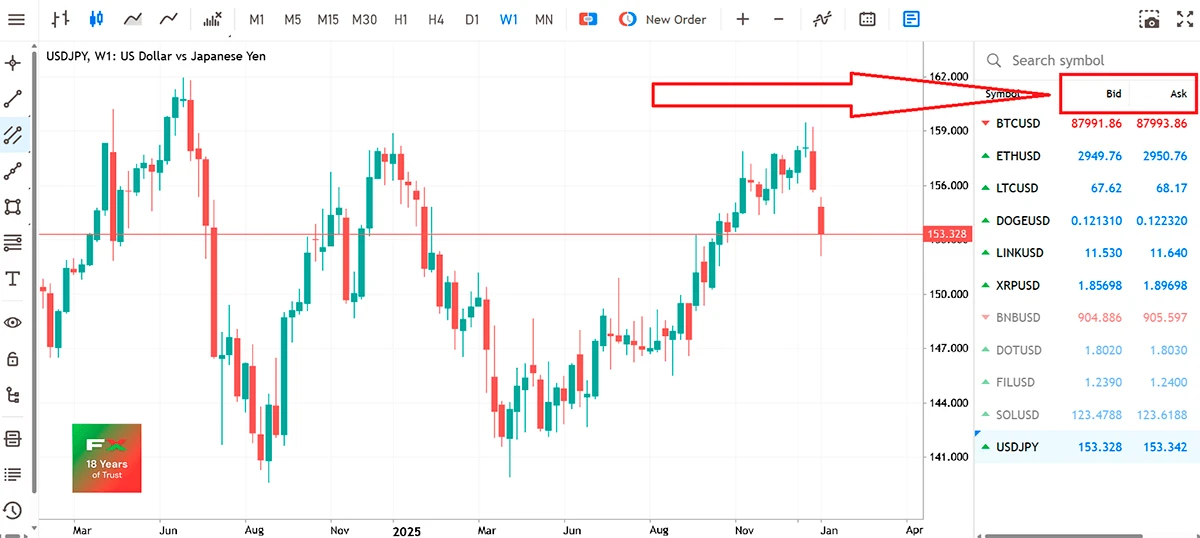
A ilustração mostra como o preço visível no gráfico difere do preço de mercado realmente executado.
Porque é que este é um comportamento normal do mercado
Isto não é:
❌ erro da plataforma
❌ manipulação por parte da corretora
❌ definição de preços incorreta
Isto é:
✅ execução de mercado em tempo real
✅ correspondência padrão de liquidez
✅ mecânica global de negociação
Todos os sistemas de negociação profissionais funcionam desta forma.
Porque é que isto é importante para os traders
Compreender a mecânica de execução ajuda os traders a:
- evitar surpresas na execução
- gerir o risco durante a volatilidade
- colocar stop losses e take profits realistas
- negociar com mais confiança
A maioria das reclamações sobre execução resulta de uma má compreensão da forma como os preços são apresentados no gráfico.
O que vem a seguir
A seguir, vamos explicar:
Porque é que a minha ordem pendente foi ignorada ou ativada mais tarde do que o esperado?
Isto aborda a volatilidade, as lacunas de liquidez e a prioridade de execução.
Voltar Voltar