CFD, ஃபியூச்சர்ஸ் மற்றும் ஆப்ஷன்ஸ் இடையேயான வேறுபாடு என்ன?
சுருக்கமான பதில்: CFD, ஃபியூச்சர்ஸ் மற்றும் ஆப்ஷன்ஸ் அனைத்தும் டெரிவேடிவ்கள் (வழிப்பொருள்கள்), ஆனால் அவை வெவ்வேறு விதமாக இயங்குகின்றன. ஒரு CFD தரகர் ஒப்பந்தத்தின் வழியாக விலை நகர்வைப் பின்தொடர்கிறது. ஃபியூச்சர்ஸ் ஒப்பந்தம் என்பது காலாவதி மற்றும் தீர்வு விதிகளைக் கொண்ட தரப்படுத்தப்பட்ட கடமை. ஆப்ஷன் ஒன்று, பிரீமியத்திற்கு ஈடாக வாங்குபவருக்கு ஒரு உரிமையை வழங்குகிறது — கடமையை அல்ல.
அடிப்படை சொத்தை நேரடியாக வைத்திருக்காமல் விலை நகர்வுகளில் வர்த்தகம் செய்ய CFD, ஃபியூச்சர்ஸ் மற்றும் ஆப்ஷன்ஸ் அனைத்தையும் பயன்படுத்த முடியும். முக்கிய வேறுபாடு ஒப்பந்த அமைப்பில் உள்ளது. CFDகள் பொதுவாக விலை வேறுபாட்டிற்கான தரகர் அடிப்படையிலான ஒப்பந்தங்கள், ஃபியூச்சர்ஸ் காலாவதியுடன் கூடிய தரப்படுத்தப்பட்ட ஒப்பந்தங்கள், ஆப்ஷன்ஸ் நேர்கோட்டல்லாத பேஆஃப் நடத்தையுடன் கூடிய பிரீமியம் அடிப்படையிலான உரிமைகள்.
CFD, ஃபியூச்சர்ஸ் மற்றும் ஆப்ஷன்ஸ் இடையேயான முதன்மை வேறுபாடு என்ன?
ஒவ்வொரு கருவியும் சந்தைக்கான வெளிப்பாட்டை (exposure) எவ்வாறு வழங்குகிறது என்பதே முதன்மை வேறுபாடு.
ஒரு வர்த்தகத்தைத் தொடங்கும் விலைக்கும் மூடும் விலைக்கும் இடையேயான வேறுபாட்டுக்கான வெளிப்பாட்டை CFD வழங்குகிறது. வர்த்தகர் அடிப்படை சொத்தை உரிமையாக்கிக் கொள்வதில்லை.
ஃபியூச்சர்ஸ் ஒப்பந்தம் என்பது நிலையான காலாவதியுடன் கூடிய தரப்படுத்தப்பட்ட உடன்பாடு. ஒப்பந்த விதிமுறைகளுக்கு ஏற்ப வாங்க, விற்க, ஒப்படைக்க அல்லது பணத்தில் தீர்வு செய்ய வேண்டிய கடமையை அது உருவாக்குகிறது.
வரையறுக்கப்பட்ட விதிமுறைகளின் கீழ் வாங்க அல்லது விற்க உரிமையை — கடமையை அல்ல — ஆப்ஷன் வாங்குபவருக்கு வழங்குகிறது. வாங்குபவர் ஒரு பிரீமியத்தைச் செலுத்துகிறார். விற்பனையாளர் பிரீமியத்தைப் பெறுகிறார், ஆனால் ஆப்ஷன் செயல்படுத்தப்பட்டால் அல்லது ஒப்படைக்கப்பட்டால் கடமையை ஏற்க வேண்டும்.
எளிமையாகச் சொன்னால்: CFDகள் நெகிழ்வான விலை-வேறுபாட்டு ஒப்பந்தங்கள், ஃபியூச்சர்ஸ் தரப்படுத்தப்பட்ட கடமைகள், ஆப்ஷன்ஸ் நிபந்தனைக்குட்பட்ட உரிமைகள்.
CFD என்றால் என்ன?
CFD அல்லது வேறுபாட்டுக்கான ஒப்பந்தம் என்பது, அடிப்படை சொத்தை உரிமையாக்கிக் கொள்ளாமல் ஒரு அடிப்படை சந்தையின் விலை நகர்வில் ஊகவணிகம் செய்ய வர்த்தகருக்கு அனுமதிக்கும் ஒரு டெரிவேடிவ்.
உதாரணமாக, ஒரு வர்த்தகர் தங்கத்தின் விலை நகர்வில் வர்த்தகம் செய்ய CFD-யைப் பயன்படுத்தலாம்; அதேபோல் எண்ணெய், குறியீடு, நாணய இணை அல்லது பங்கு ஆகியவற்றிலும் செய்யலாம். வர்த்தகர் உண்மையான தங்கத்தையோ, எண்ணெய் பீப்பாய்களையோ, குறியீட்டுப் பங்குகளையோ, அடிப்படைப் பங்கையோ வாங்குவதில்லை.
CFDகள் பொதுவாக ஒரு தரகர் வழியாக வர்த்தகம் செய்யப்படுகின்றன. இதன் பொருள், இறுதி வர்த்தக முடிவு சந்தை நகர்வு, நிலை அளவு, ஸ்ப்ரெட், சாத்தியமான கமிஷன், இரவுநேர நிதியளிப்பு, மார்ஜின் விதிகள் மற்றும் நிறைவேற்று நிலைமைகளைப் பொறுத்தது.
NordFX ஒரு பல-சொத்து தரகர் என்பதால் இந்த வேறுபாடு முக்கியமானது: CFDகள் விலை நகர்வுகளுக்கான அணுகலை வழங்குகின்றன, அடிப்படை சொத்தின் நேரடி உரிமையை அல்ல.
ஃபியூச்சர்ஸ் ஒப்பந்தம் என்றால் என்ன?
ஃபியூச்சர்ஸ் ஒப்பந்தம் என்பது பரிவர்த்தனையகத்தில் வர்த்தகம் செய்யப்படும் தரப்படுத்தப்பட்ட டெரிவேடிவ் ஒப்பந்தம். அடிப்படை சொத்து, ஒப்பந்த அளவு, காலாவதி தேதி, டிக் அளவு மற்றும் தீர்வு முறை உள்ளிட்ட வரையறுக்கப்பட்ட ஒப்பந்த விதிமுறைகளை அது கொண்டுள்ளது.
பண்டங்கள், பங்குக் குறியீடுகள், நாணயங்கள், வட்டி விகிதங்கள் மற்றும் எரிசக்தி போன்ற சந்தைகளில் ஃபியூச்சர்ஸ் பயன்படுத்தப்படுகிறது. ஊகவணிகர்கள், ஹெட்ஜர்கள் மற்றும் நிறுவன சந்தை பங்கேற்பாளர்கள் இவற்றைப் பயன்படுத்துகிறார்கள்.
பல உருள்நிலை (rolling) CFDகளைப் போலன்றி, ஃபியூச்சர்ஸுக்கு நிலையான காலாவதி தேதிகள் உள்ளன. காலாவதி வரை ஒப்பந்தத்தை வைத்திருக்க விரும்பாத வர்த்தகர், இறுதி வர்த்தக நாளுக்கு முன்பே நிலையை மூடுவார் அல்லது ரோல் செய்வார்.
ஃபியூச்சர்ஸ் நேர்கோட்டுக் கருவிகள். ஃபியூச்சர்ஸ் விலை ஒரு குறிப்பிட்ட அளவு நகர்ந்தால், ஒப்பந்த அளவுக்கு ஏற்ப நிலையின் மதிப்பு விகிதாசாரமாக மாறுகிறது.
ஆப்ஷன் என்றால் என்ன?
ஆப்ஷன் என்பது வாங்குபவருக்கு ஒரு உரிமையை வழங்கும் — ஆனால் கடமையை அல்ல — ஒரு டெரிவேடிவ்.
கால் ஆப்ஷன், வரையறுக்கப்பட்ட விதிமுறைகளின் கீழ் வாங்குவதற்கான அல்லது மேல்நோக்கு நகர்வால் பயன்பெறுவதற்கான உரிமையை வாங்குபவருக்கு வழங்குகிறது.
புட் ஆப்ஷன், வரையறுக்கப்பட்ட விதிமுறைகளின் கீழ் விற்பதற்கான அல்லது கீழ்நோக்கு நகர்வால் பயன்பெறுவதற்கான உரிமையை வாங்குபவருக்கு வழங்குகிறது.
ஆப்ஷன் வாங்குபவர் ஒரு பிரீமியத்தைச் செலுத்துகிறார். எளிய நீண்ட ஆப்ஷனுக்கு, பரிவர்த்தனைச் செலவுகளைத் தவிர்த்து, இந்தப் பிரீமியமே பொதுவாக அதிகபட்ச நட்டம்.
ஆப்ஷன் விற்பனையாளர் பிரீமியத்தைப் பெறுகிறார், ஆனால் ஒப்பந்தத்தின் கடமைப் பகுதியை ஏற்கிறார். சில குறுகிய (short) ஆப்ஷன் நிலைகள், குறிப்பாக அவை பாதுகாப்பற்றவையாக இருந்தால், மிகப் பெரிய நட்டங்களை ஏற்படுத்தலாம்.
ஆப்ஷன்ஸ் நேர்கோட்டல்லாத கருவிகள். அவற்றின் மதிப்பு அடிப்படை விலை, ஸ்ட்ரைக் விலை, காலாவதிக்கான நேரம், உட்குறிப்பு ஏற்ற இறக்கம், வட்டி விகிதங்கள் மற்றும் சந்தை எதிர்பார்ப்புகளைப் பொறுத்தது.
CFD, ஃபியூச்சர்ஸ் மற்றும் ஆப்ஷன்ஸ் எவ்வாறு ஒப்பிடப்படுகின்றன?
காரணி | CFDகள் | ஃபியூச்சர்ஸ் | ஆப்ஷன்ஸ் |
அடிப்படை அமைப்பு | விலை வேறுபாட்டைப் பரிமாறிக்கொள்ள தரகருடன் செய்யப்படும் ஒப்பந்தம் | தரப்படுத்தப்பட்ட பரிவர்த்தனையக ஒப்பந்தம் | வரையறுக்கப்பட்ட விதிமுறைகளின் கீழ் வாங்க அல்லது விற்க உரிமை |
அடிப்படை சொத்தின் உரிமை | நேரடி உரிமை இல்லை | ஒப்படைப்பு பொருந்தாவிட்டால் பொதுவாக உரிமை இல்லை | செயல்படுத்தப்பட்டு பொருள்ரீதியாகத் தீர்க்கப்படாவிட்டால் உரிமை இல்லை |
முதன்மைக் கடமை | வர்த்தகம் மூடும்போது விலை வேறுபாட்டைத் தீர்ப்பது | மார்ஜின், காலாவதி மற்றும் தீர்வுக் கடமைகளை நிறைவேற்றுவது | வாங்குபவருக்கு உரிமை; விற்பனையாளருக்கு கடமை |
பேஆஃப் வகை | நேர்கோட்டு | நேர்கோட்டு | நேர்கோட்டல்லாத |
காலாவதி | பெரும்பாலும் உருள்நிலை; சில CFDகளுக்கு தேதி உண்டு | நிலையான காலாவதி | நிலையான காலாவதி |
மார்ஜின்/மூலதனம் | மார்ஜின் வைப்புத்தொகை தேவை | தொடக்க மற்றும் பராமரிப்பு மார்ஜின் தேவை | வாங்குபவர் பிரீமியம் செலுத்துகிறார்; விற்பனையாளருக்கு மார்ஜின் தேவைப்படலாம் |
இரவுநேரச் செலவு | உருள்நிலை CFDகளுக்கு பெரும்பாலும் பொருந்தும் | பொதுவாக ஃபியூச்சர்ஸ் விலையிடலில் பிரதிபலிக்கும் | எளிய நீண்ட ஆப்ஷனுக்கு தனி இரவுநேர நிதியளிப்பு இல்லை, ஆனால் கால அரிப்பு முக்கியம் |
எதிர்தரப்பு அமைப்பு | பொதுவாக தரகர்/வெளியீட்டாளர் | பரிவர்த்தனையகம் மற்றும் க்ளியரிங் அமைப்பு | பட்டியலிடப்பட்ட ஆப்ஷன்களுக்கு பரிவர்த்தனையகம் மற்றும் க்ளியரிங் அமைப்பு |
பொதுவான பயன்பாடு | குறுங்கால நெகிழ்வான சந்தை வெளிப்பாடு | திசைசார் வர்த்தகம், ஹெட்ஜிங், ஸ்ப்ரெட்கள் | ஹெட்ஜிங், ஏற்ற இறக்கக் கண்ணோட்டங்கள், வரையறுக்கப்பட்ட-அபாய உத்திகள் |
முதன்மை அபாயப் பகுதி | லீவரேஜ், நிதியளிப்புச் செலவு, தரகர்/வெளியீட்டாளர் வெளிப்பாடு | லீவரேஜ், காலாவதி, மார்ஜின் கால்கள், ஒப்பந்த அளவு | பிரீமியம் நட்டம், கால அரிப்பு, சிக்கல்தன்மை, விற்பனையாளர் அபாயம் |
பேஆஃப் எவ்வாறு வேறுபடுகிறது?
CFDகளுக்கும் ஃபியூச்சர்ஸுக்கும் பொதுவாக நேர்கோட்டு பேஆஃப் உள்ளது.
அதாவது, அடிப்படை சந்தையின் விலை நகர்வுக்கு ஏற்ப லாபம் அல்லது நட்டம் நேரடியாக மாறுகிறது. நிலைக்கு ஆதரவாக சந்தை நகர்ந்தால் முடிவு மேம்படும். நிலைக்கு எதிராக நகர்ந்தால் முடிவு மோசமாகும்.
ஆப்ஷன்களுக்கு நேர்கோட்டல்லாத பேஆஃப் உள்ளது.
நீண்ட கால் ஆப்ஷன், ஸ்ட்ரைக் விலைக்கு மேலான மேல்நோக்கு நகர்வால் பயன்பெறலாம். நீண்ட புட் ஆப்ஷன், கீழ்நோக்கு நகர்வால் பயன்பெறலாம். இரு நிலைகளிலும், வாங்குபவரின் நட்டம் பொதுவாக செலுத்திய பிரீமியத்திற்கு மட்டுப்படுத்தப்படுகிறது.
ஆப்ஷன்ஸ் தானாகவே பாதுகாப்பானவை என்று இது பொருள்படாது. எதிர்பார்த்த நகர்வு நேரத்திற்குள் நடக்காவிட்டால் நீண்ட ஆப்ஷன் மதிப்பிழந்து காலாவதியாகலாம். விற்பனையாளருக்கு எதிராக சந்தை கூர்மையாக நகர்ந்தால் குறுகிய ஆப்ஷன் பெரிய நட்டங்களை உருவாக்கலாம்.
மார்ஜின் மற்றும் லீவரேஜ் எவ்வாறு இயங்குகின்றன?
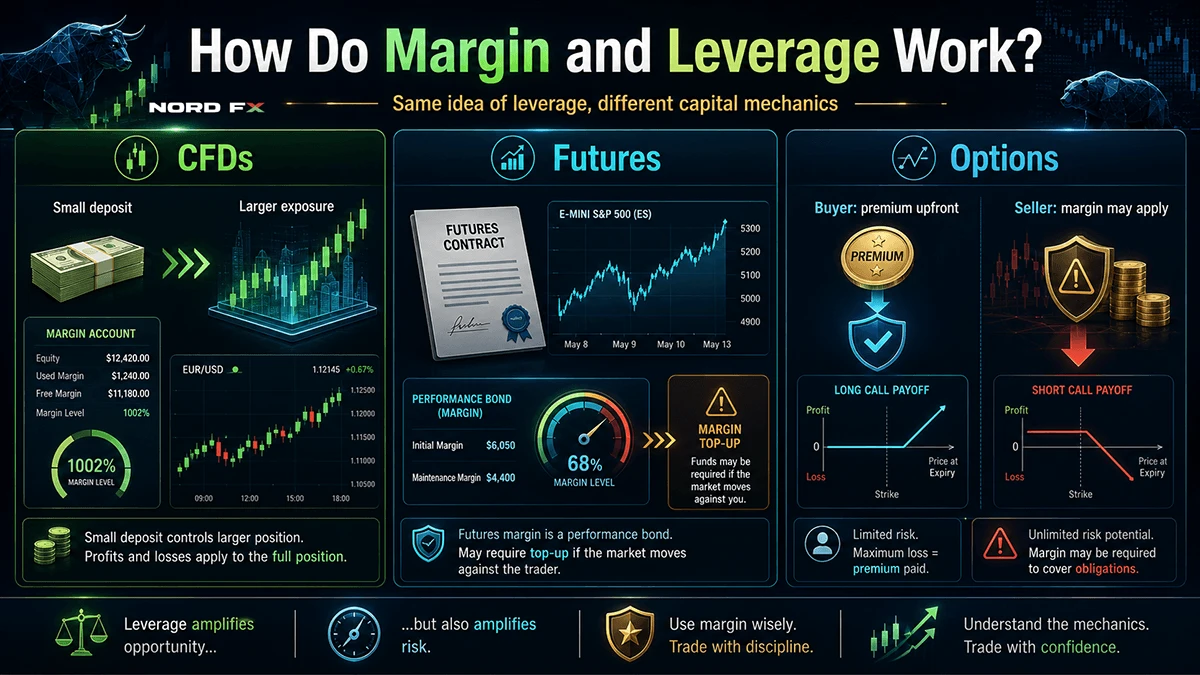
CFDகளுக்கு பொதுவாக அடிப்படை வெளிப்பாட்டுக்கான முழுத் தொகைக்குப் பதிலாக மார்ஜின் தேவைப்படுகிறது. இது சிறிய வைப்புத்தொகையுடன் பெரிய நிலையைக் கட்டுப்படுத்த வர்த்தகருக்கு அனுமதிக்கிறது.
அபாயம் என்னவெனில், லாபமும் நட்டமும் மார்ஜின் வைப்புத்தொகையின் மீது மட்டுமல்ல, முழு நிலை அளவின் மீது கணக்கிடப்படுகின்றன. எனவே சிறிய சந்தை நகர்வு கூட கணக்கின் ஈக்விட்டியில் பெரிய தாக்கத்தை ஏற்படுத்தலாம்.
ஃபியூச்சர்ஸும் மார்ஜினைப் பயன்படுத்துகிறது, ஆனால் ஃபியூச்சர்ஸ் மார்ஜின் CFD மார்ஜின் வைப்புத்தொகையிலிருந்து வேறுபட்டது. ஒப்பந்தத்தின் அன்றாட விலை நகர்வைத் தாங்கும் செயல்திறன் பிணையாக அது இயங்குகிறது. நிலைக்கு எதிராக சந்தை நகர்ந்தால், வர்த்தகர் கூடுதல் நிதியைச் சேர்க்க வேண்டியிருக்கலாம்.
ஆப்ஷன்ஸ் வேறுபட்ட மூலதன மாதிரியைப் பயன்படுத்துகிறது. நீண்ட ஆப்ஷன் வாங்குபவர் பொதுவாக பிரீமியத்தை முன்பணமாகச் செலுத்துகிறார். ஆப்ஷன் செயல்படுத்தப்பட்டால் அல்லது ஒப்படைக்கப்பட்டால் கடமையை ஏற்பதால், குறுகிய ஆப்ஷன் விற்பனையாளருக்கு மார்ஜின் தேவைப்படலாம்.
காலாவதி மற்றும் தீர்வு எவ்வாறு இயங்குகின்றன?
CFDகள் பெரும்பாலும் உருள்நிலைக் கருவிகள். பல CFD நிலைகள், வர்த்தகர் மூடும் வரை அல்லது மார்ஜின் விதிகளின் கீழ் தரகர் மூடும் வரை திறந்திருக்கலாம். சில CFDகளுக்கு தேதி இருக்கலாம், ஆனால் பல சில்லறை CFDகள் நிலையான ஒப்படைப்பு மாதங்களைக் கொண்ட பரிவர்த்தனையக ஃபியூச்சர்ஸ் போல இயங்குவதில்லை.
ஃபியூச்சர்ஸுக்கு நிலையான காலாவதிகள் உள்ளன. இறுதி வர்த்தக நாள், தீர்வு முறை மற்றும் ஒப்பந்தம் பணத்தில் தீர்க்கப்படுகிறதா அல்லது பொருள்ரீதியாக ஒப்படைக்கப்படுகிறதா என்பதை வர்த்தகர் அறிந்திருக்க வேண்டும்.
ஆப்ஷன்களுக்கும் நிலையான காலாவதிகள் உள்ளன. சில ஆப்ஷன்கள் பணத்தில் தீர்க்கப்படுகின்றன, சில அடிப்படை சொத்தை ஒப்படைப்பதன் மூலம் தீர்க்கப்படுகின்றன, ஃபியூச்சர்ஸ் மீதான சில ஆப்ஷன்கள் செயல்படுத்தப்பட்டால் ஃபியூச்சர்ஸ் நிலையை உருவாக்கலாம்.
காலாவதி தேதி நெருங்க நெருங்க கால மதிப்பு குறைவதால், ஆப்ஷன்களுக்கே காலாவதி மிக முக்கியமானது. எதிர்பார்த்த நகர்வு மிகவும் தாமதமாக நிகழ்ந்தால், சரியான சந்தைக் கண்ணோட்டமும் பணத்தை இழக்க வழிவகுக்கும்.
செலவுகள் எவ்வாறு வேறுபடுகின்றன?
தரகர் மற்றும் கருவியைப் பொறுத்து CFD செலவுகளில் ஸ்ப்ரெட், கமிஷன், இரவுநேர நிதியளிப்பு, நாணய மாற்றம் மற்றும் கணக்கு தொடர்பான பிற கட்டணங்கள் அடங்கலாம்.
ஃபியூச்சர்ஸ் செலவுகள் பொதுவாக மிகவும் வெளிப்படையானவை. அவற்றில் தரகர் கமிஷன், பரிவர்த்தனையக கட்டணங்கள், க்ளியரிங் கட்டணங்கள், சந்தைத் தரவுக் கட்டணங்கள் மற்றும் பல ஒப்பந்த காலாவதிகளுக்கு இடையே வெளிப்பாட்டைத் தொடர்ந்தால் ரோல் செலவுகளும் அடங்கலாம்.
ஆப்ஷன் செலவுகளில் பிரீமியம், பிட்-ஆஸ்க் ஸ்ப்ரெட், தரகர் கமிஷன், பரிவர்த்தனையக கட்டணங்கள் மற்றும் தரகரைப் பொறுத்து சாத்தியமான செயல்படுத்துதல் அல்லது ஒப்படைப்பு தொடர்பான கட்டணங்கள் அடங்கும்.
முக்கிய அம்சம் என்னவெனில், மூன்று கருவிகளிலும் “செலவு” என்பது ஒரே பொருளைக் குறிக்காது. CFD எளிமையாகத் தோன்றலாம், ஆனால் இரவுநேர நிதியளிப்பைக் கொண்டிருக்கும். ஃபியூச்சர்ஸில் கட்டணங்கள் வெளிப்படையாக இருக்கலாம், ஆனால் ஒப்பந்த அளவு பெரியதாக இருக்கும். ஆப்ஷன் வாங்குபவருக்கு அபாயத்தை வரையறுக்கலாம், ஆனால் கால அரிப்பால் மதிப்பை இழக்கும்.
எந்தக் கருவி எந்த வர்த்தக இலக்குக்குப் பொருத்தமானது?
நெகிழ்வான நிலை அளவீடு, பல-சொத்து அணுகல் மற்றும் அடிப்படை சொத்தை உரிமையாக்காமல் குறுங்கால விலை வெளிப்பாடு தேவைப்படும் வர்த்தகர்களுக்கு CFDகள் பொருந்தலாம். லீவரேஜ், ஸ்ப்ரெட்கள் மற்றும் இரவுநேர நிதியளிப்பு இறுதி முடிவைப் பாதிக்கக்கூடும் என்பதால் கடுமையான அபாயக் கட்டுப்பாடு தேவை.
தரப்படுத்தப்பட்ட சந்தை வெளிப்பாட்டை விரும்பும், ஒப்பந்த அளவு, காலாவதி, மார்ஜின் மற்றும் ரோல் தேதிகளை நிர்வகிக்கக்கூடிய வர்த்தகர்களுக்கு ஃபியூச்சர்ஸ் பொருந்தலாம். குறியீடு, பண்டம், நாணயம் மற்றும் ஹெட்ஜிங் உத்திகளுக்கு இவை பரவலாகப் பயன்படுத்தப்படுகின்றன.
பேஆஃப் வடிவமைப்பு தேவைப்படும் வர்த்தகர்களுக்கு ஆப்ஷன்ஸ் பொருந்தலாம். வரையறுக்கப்பட்ட-அபாய திசைசார் வர்த்தகங்கள், ஹெட்ஜிங், ஏற்ற இறக்க வெளிப்பாடு அல்லது வருவாய் உத்திகளுக்கு அவற்றைப் பயன்படுத்தலாம். ஆப்ஷன் விலையிடல் ஒரே நேரத்தில் பல மாறிகளைப் பொறுத்திருப்பதால் அதிக அறிவு தேவை.
அனைவருக்கும் பொருந்தும் சிறந்த தேர்வு எதுவும் இல்லை. வர்த்தகரின் நோக்கம், கணக்கு அளவு, கால எல்லை, சந்தை அறிவு மற்றும் அபாயப் பொறுதி ஆகியவற்றைப் பொறுத்து பொருத்தமான கருவி மாறுபடும்.
நடைமுறை உதாரணம்: தங்க விலைக் கண்ணோட்டத்தில் வர்த்தகம்
மத்திய வங்கி அறிவிப்புக்குப் பிறகு தங்க விலைகள் கூர்மையாக நகரும் என்று ஒரு வர்த்தகர் எதிர்பார்க்கிறார் என்று வைத்துக்கொள்வோம். அவர் உண்மையான தங்கத்தை வாங்க விரும்பவில்லை.
தங்க CFD மூலம், வர்த்தகர் தங்க விலை நகர்வுக்கு நீண்ட அல்லது குறுகிய வெளிப்பாட்டை எடுக்கலாம். நிலையின் அளவு நெகிழ்வாக இருக்கலாம், ஆனால் ஸ்ப்ரெட், மார்ஜின், இரவுநேர நிதியளிப்பு மற்றும் சந்தை எதிராக நகர்ந்தால் ஏற்படும் நட்ட அபாயத்தை வர்த்தகர் கருத்தில் கொள்ள வேண்டும்.
தங்க ஃபியூச்சர்ஸ் ஒப்பந்தம் மூலம், வர்த்தகர் நிலையான காலாவதியுடன் கூடிய தரப்படுத்தப்பட்ட ஒப்பந்தத்தைப் பயன்படுத்துகிறார். விலையிடல் பரிவர்த்தனையக அடிப்படையிலானது, ஆனால் ஒப்பந்த அளவு, மார்ஜின் தேவைகள் மற்றும் காலாவதி நிர்வாகம் சிறிய வர்த்தகருக்கு குறைந்த நெகிழ்வுத்தன்மை கொண்டதாக இருக்கலாம்.
தங்க ஆப்ஷன் மூலம், உயர்வை எதிர்பார்த்தால் கால், வீழ்ச்சியை எதிர்பார்த்தால் புட் ஆப்ஷனை வர்த்தகர் வாங்கலாம். பிரீமியம் முன்பணமாகச் செலுத்தப்படுகிறது. காலாவதிக்கு முன் எதிர்பார்த்த நகர்வு நடக்காவிட்டால், ஆப்ஷன் அதன் மதிப்பின் ஒரு பகுதியை அல்லது முழுவதையும் இழக்கலாம்.
மூன்று நிலைகளிலும் சந்தைக் கண்ணோட்டம் ஒரே மாதிரியானது. அபாயச் சுயவிவரம் அப்படியல்ல. CFD நெகிழ்வான நேர்கோட்டு வெளிப்பாட்டை உருவாக்குகிறது, ஃபியூச்சர் தரப்படுத்தப்பட்ட நேர்கோட்டு வெளிப்பாட்டை உருவாக்குகிறது, ஆப்ஷன் காலவரையறைக்குட்பட்ட நேர்கோட்டல்லாத வெளிப்பாட்டை உருவாக்குகிறது.
வர்த்தகர்கள் செய்யும் பொதுவான தவறுகள் என்ன?
CFD, ஃபியூச்சர்ஸ் மற்றும் ஆப்ஷன்களில் மார்ஜின் ஒரே பொருளைக் குறிப்பதாகக் கருதி ஒப்பிடுவது ஒரு பொதுவான தவறு. CFD மார்ஜின், ஃபியூச்சர்ஸ் மார்ஜின் மற்றும் ஆப்ஷன் பிரீமியம் வேறுபட்ட மூலதன வழிமுறைகள்.
காலாவதியைப் புறக்கணிப்பது மற்றொரு தவறு. CFDகள் உருள்நிலையாக இருக்கலாம், ஆனால் ஃபியூச்சர்ஸ் மற்றும் ஆப்ஷன்களுக்கு நிலையான தேதிகள் உள்ளன. ரோல் தேதிகள், தீர்வு அல்லது கால அரிப்பை வர்த்தகர் புரிந்துகொள்ளாவிட்டால் நல்ல வர்த்தக யோசனையும் தோல்வியடையலாம்.
நீண்ட ஆப்ஷன்கள் எப்போதும் பாதுகாப்பானவை என்று கருதுவது மூன்றாவது தவறு. நீண்ட ஆப்ஷன் நட்டத்தைப் பிரீமியத்திற்கு மட்டுப்படுத்தலாம், ஆனால் காலாவதிக்கு முன் சந்தை போதுமான அளவு நகராவிட்டால் அந்தப் பிரீமியம் இழக்கப்படலாம்.
CFDகளை உரிமையாகக் கருதுவது நான்காவது தவறு. CFD விலை நகர்வைப் பின்தொடர்கிறது; அது பொதுவாக பங்குகள், பண்டங்கள் அல்லது கிரிப்டோ சொத்துகளின் உரிமையை வழங்குவதில்லை.
செலவுகளைப் புறக்கணிப்பது ஐந்தாவது தவறு. இரவுநேர நிதியளிப்பு, ஸ்ப்ரெட்கள், கமிஷன்கள், பரிவர்த்தனையக கட்டணங்கள், க்ளியரிங் கட்டணங்கள் மற்றும் ஆப்ஷன் பிரீமியங்கள் இறுதி முடிவை கணிசமாக மாற்றக்கூடும்.
நோக்கத்தை வரையறுப்பதற்கு முன்பே கருவியைத் தேர்ந்தெடுப்பது ஆறாவது தவறு. இலக்கு குறுங்கால திசைசார் வெளிப்பாடா, ஹெட்ஜிங்கா, ஏற்ற இறக்க வெளிப்பாடா, வருவாய் ஈட்டலா அல்லது நீண்டகால உரிமையா என்பதை வர்த்தகர் முதலில் தீர்மானிக்க வேண்டும்.
அடிக்கடி கேட்கப்படும் கேள்விகள்
CFD, ஃபியூச்சர்ஸ் மற்றும் ஆப்ஷன்ஸ் இடையேயான மிகப் பெரிய வேறுபாடு என்ன?
மிகப் பெரிய வேறுபாடு ஒப்பந்த அமைப்பு. CFDகள் பொதுவாக விலை வேறுபாட்டுக்கான தரகர் ஒப்பந்தங்கள், ஃபியூச்சர்ஸ் காலாவதியுடன் கூடிய தரப்படுத்தப்பட்ட கடமைகள், ஆப்ஷன்ஸ் வாங்குபவருக்கு உரிமையை வழங்குகின்றன — கடமையை அல்ல.
CFDகள் ஃபியூச்சர்ஸ்தானா?
இல்லை. CFDகளும் ஃபியூச்சர்ஸும் விலை நகர்வுகளைப் பின்தொடரக்கூடும், ஆனால் அவை ஒன்றல்ல. CFDகள் பொதுவாக தரகர் அடிப்படையிலான ஒப்பந்தங்கள், ஃபியூச்சர்ஸ் நிலையான காலாவதிகளைக் கொண்ட தரப்படுத்தப்பட்ட பரிவர்த்தனையக ஒப்பந்தங்கள்.
ஃபியூச்சர்ஸை விட CFD சிறந்ததா?
ஃபியூச்சரை விட CFD தானாகவே சிறந்ததல்ல. CFDகள் நெகிழ்வான நிலை அளவீட்டை வழங்கலாம், ஃபியூச்சர்ஸ் தரப்படுத்தப்பட்ட பரிவர்த்தனையக வெளிப்பாட்டை வழங்குகிறது. வர்த்தக நோக்கம், வைத்திருக்கும் காலம், செலவுகள் மற்றும் அபாயக் கட்டுப்பாட்டைப் பொறுத்து சிறந்த தேர்வு மாறுபடும்.
ஆப்ஷன்களை விட CFDகள் அதிக அபாயமானவையா?
CFDகள் லீவரேஜைப் பயன்படுத்துவதாலும், இரவுநேர நிதியளிப்பு மற்றும் தரகர்/வெளியீட்டாளர் வெளிப்பாட்டை உள்ளடக்கக்கூடும் என்பதாலும் அபாயமானவையாக இருக்கலாம். ஆப்ஷன்களுக்கு பிரீமியம் நட்டம், கால அரிப்பு, சிக்கல்தன்மை மற்றும் விற்பனையாளர்களுக்கான கணிசமான அபாயம் உள்ளிட்ட வேறுபட்ட அபாயங்கள் உள்ளன.
ஃபியூச்சர்ஸ் சிறந்ததா அல்லது ஆப்ஷன்ஸ் சிறந்ததா?
எதுவும் எப்போதும் சிறந்ததல்ல. நேர்கோட்டு திசைசார் வெளிப்பாடு அல்லது ஹெட்ஜிங்கிற்கு ஃபியூச்சர்ஸ் பொருந்தலாம். வரையறுக்கப்பட்ட-அபாய வர்த்தகங்கள், ஏற்ற இறக்கக் கண்ணோட்டங்கள் அல்லது சமச்சீரற்ற பேஆஃப் அமைப்புகளுக்கு ஆப்ஷன்ஸ் பொருந்தலாம்.
ஃபியூச்சர்ஸ் மற்றும் ஆப்ஷன்களில் எது பாதுகாப்பானது?
பாதுகாப்பு நிலை அமைப்பு மற்றும் அபாய நிர்வாகத்தைப் பொறுத்தது. முழுமையாகச் செலுத்தப்பட்ட நீண்ட ஆப்ஷனின் நட்டம் பிரீமியத்திற்கு மட்டுப்படுத்தப்பட்டுள்ளது, ஆனால் அது மதிப்பிழந்து காலாவதியாகலாம். ஃபியூச்சர்ஸ் வெளிப்படையானதும் தரப்படுத்தப்பட்டதும் ஆகும், ஆனால் லீவரேஜ் மற்றும் மார்ஜின் கால்கள் மூலம் பெரிய நட்டங்களை உருவாக்கலாம்.
ஒரே சந்தைக் கண்ணோட்டத்திற்கு வர்த்தகர்கள் CFD, ஃபியூச்சர்ஸ் மற்றும் ஆப்ஷன்ஸ் அனைத்தையும் பயன்படுத்த முடியுமா?
ஆம். ஏற்றம் அல்லது இறக்கம் சார்ந்த சந்தைக் கண்ணோட்டத்தை மூன்று கருவிகள் வழியாகவும் பெரும்பாலும் வெளிப்படுத்த முடியும். மார்ஜின், செலவு, காலாவதி, தீர்வு மற்றும் பேஆஃப் எவ்வாறு இயங்குகின்றன என்பதில்தான் வேறுபாடு.
வர்த்தகர்கள் எதைத் தேர்ந்தெடுக்க வேண்டும்?
வர்த்தக நோக்கம் | அதிகப் பொருத்தமான கருவி | ஏன் |
நெகிழ்வான குறுங்கால விலை வெளிப்பாடு | CFDகள் | அடிப்படை சொத்தை உரிமையாக்காமல் சிறிய நிலை அளவீட்டையும் பல சந்தைகளுக்கான அணுகலையும் CFDகள் வழங்கலாம். |
தரப்படுத்தப்பட்ட சந்தை வெளிப்பாடு | ஃபியூச்சர்ஸ் | ஃபியூச்சர்ஸில் நிலையான ஒப்பந்த விதிமுறைகள், பரிவர்த்தனையக வர்த்தகம், காலாவதி தேதிகள் மற்றும் தெளிவான தீர்வு விதிகள் உள்ளன. |
வரையறுக்கப்பட்ட-அபாய திசைசார் கண்ணோட்டம் | நீண்ட ஆப்ஷன்கள் | நீண்ட ஆப்ஷன் பொதுவாக நட்டத்தை, செலவுகளைத் தவிர்த்து, செலுத்திய பிரீமியத்திற்கு மட்டுப்படுத்துகிறது. |
தற்போதுள்ள நிலையை ஹெட்ஜ் செய்தல் | ஃபியூச்சர்ஸ் அல்லது ஆப்ஷன்ஸ் | ஃபியூச்சர்ஸ் நேர்கோட்டு வெளிப்பாட்டை ஹெட்ஜ் செய்யலாம், ஆப்ஷன்ஸ் மேல்நோக்கு வாய்ப்பைத் தக்கவைத்துக்கொண்டே கீழ்நோக்கு அபாயத்தை ஹெட்ஜ் செய்யலாம். |
ஏற்ற இறக்கம் சார்ந்த உத்தி | ஆப்ஷன்ஸ் | உட்குறிப்பு ஏற்ற இறக்கம் மற்றும் காலாவதிக்கான நேரத்தால் ஆப்ஷன்ஸ் நேரடியாகப் பாதிக்கப்படுகின்றன. |
முடிவுரை
CFD, ஃபியூச்சர்ஸ் மற்றும் ஆப்ஷன்ஸ் ஒரே அடிப்படை சந்தையைப் பின்தொடர்ந்தாலும், அவை ஒன்றுக்கொன்று பதிலாகப் பயன்படுத்தக்கூடியவை அல்ல.
CFDகள் பொதுவாக விலை வேறுபாடுகளில் வர்த்தகம் செய்வதற்கான நெகிழ்வான தரகர் அடிப்படையிலான ஒப்பந்தங்கள். ஃபியூச்சர்ஸ் நிலையான காலாவதிகள் மற்றும் தெளிவான ஒப்பந்த விவரக்குறிப்புகளைக் கொண்ட தரப்படுத்தப்பட்ட ஒப்பந்தங்கள். ஆப்ஷன்ஸ் நேர்கோட்டல்லாத பேஆஃப் நடத்தையுடன் கூடிய பிரீமியம் அடிப்படையிலான உரிமைகள்.
நடைமுறைத் தேர்வு வர்த்தக நோக்கத்திலிருந்து தொடங்க வேண்டும். நெகிழ்வான குறுங்கால விலை வெளிப்பாட்டுக்கு CFDகள் பொருந்தலாம். தரப்படுத்தப்பட்ட சந்தை அணுகல் மற்றும் ஹெட்ஜிங்கிற்கு ஃபியூச்சர்ஸ் அதிகப் பொருத்தமானதாக இருக்கலாம். வரையறுக்கப்பட்ட-அபாய அமைப்புகள், ஏற்ற இறக்க வெளிப்பாடு அல்லது சமச்சீரற்ற பேஆஃப்-க்கு ஆப்ஷன்ஸ் சிறந்த தேர்வாக இருக்கலாம்.
எல்லா நிலைகளிலும், நிலையைத் திறப்பதற்கு முன் மார்ஜின், செலவுகள், காலாவதி, தீர்வு மற்றும் அபாயத்தை வர்த்தகர்கள் புரிந்துகொள்ள வேண்டும்.
திரும்பிச் செல்லவும் திரும்பிச் செல்லவும்