சுருக்கமான பதில்
ஸ்பிரெட்கள் சந்தை பணப்புழக்கம் குறையும்போது அல்லது இடர் அதிகரிக்கும்போது விரிவடைகின்றன. செய்தி வெளியீடுகள் மற்றும் விடுமுறை நாட்களில், பணப்புழக்கம் வழங்குநர்கள் ஏற்ற இறக்கம் மற்றும் விலை நிச்சயமற்ற தன்மையை நிர்வகிக்க ஸ்பிரெட்களை அதிகரித்து தங்களைப் பாதுகாத்துக் கொள்கிறார்கள்.
இந்த வீடியோ செய்தி வெளியீடுகள் மற்றும் குறைந்த பணப்புழக்க காலங்களில் ஸ்பிரெட்கள் ஏன் விரிவடைகின்றன என்பதை விளக்குகிறது. ஏற்ற இறக்கம் மற்றும் குறைக்கப்பட்ட சந்தை பங்கேற்பு எவ்வாறு விலை நிர்ணயத்தை பாதித்து வர்த்தக செலவுகளை அதிகரிக்கிறது என்பதை இது காட்டுகிறது.
ஸ்பிரெட் உண்மையில் எதைக் குறிக்கிறது
ஸ்பிரெட் என்பது இவற்றுக்கு இடையிலான வித்தியாசம்:
- பிட் விலை (விற்பனை விலை)
- ஆஸ்க் விலை (வாங்கும் விலை)
இது பிரதிபலிக்கிறது:
- சந்தை பணப்புழக்கம்
- செயல்படுத்தும் இடர்
- விலை கிடைக்கும் தன்மை
இறுக்கமான ஸ்பிரெட்கள் = நிலையான, பணப்புழக்கமுள்ள சந்தைகள்
விரிவான ஸ்பிரெட்கள் = ஆபத்தான அல்லது மெல்லிய சந்தைகள்
முக்கிய செய்திகளின் போது ஸ்பிரெட்கள் ஏன் விரிவடைகின்றன
ஏற்ற இறக்கம் உடனடியாக அதிகரிக்கிறது
பொருளாதார செய்தி வெளியிடப்படும்போது:
- விலைகள் மிக வேகமாக நகர்கின்றன
- திசை நிச்சயமற்றதாகிறது
- பெரிய ஆர்டர்கள் சந்தையைத் தாக்குகின்றன
பணப்புழக்கம் வழங்குநர்கள் திடீர் இழப்புகளின் அதிக இடரை எதிர்கொள்கிறார்கள்.
ஈடுசெய்ய, அவர்கள்:
👉 ஸ்பிரெட்களை தற்காலிகமாக விரிவாக்குகிறார்கள்
குறைவான நிலையான விலைகள் உள்ளன
செய்தியின் போது:
- விலை நிலைகள் விரைவாக மறைந்துவிடும்
- ஆர்டர்கள் நிலைகளுக்கிடையே குதிக்கின்றன
- சீரான செயல்படுத்தல் சாத்தியமற்றதாகிறது
விரிவான ஸ்பிரெட்கள் நிலையற்ற விலைகளில் செயல்படுத்தலிலிருந்து பாதுகாக்கின்றன.
விடுமுறை மற்றும் வேலை நேரம் அல்லாத நேரங்களில் ஸ்பிரெட்கள் ஏன் அதிகரிக்கின்றன
விடுமுறை அல்லது குறைந்த செயல்பாடு அமர்வுகளின் போது:
- குறைவான வர்த்தகர்கள் பங்கேற்கிறார்கள்
- பணப்புழக்கம் கூர்மையாக குறைகிறது
- விலை கிடைக்கும் தன்மை மெல்லியதாகிறது
குறைந்த பணப்புழக்கத்துடன்:
👉 ஸ்பிரெட்கள் இயற்கையாகவே விரிவடைகின்றன
இது பெரிய விலை நகர்வு இல்லாமலும் நடக்கிறது.
பணப்புழக்கம் வழங்குநர்களின் பங்கு
பணப்புழக்கம் வழங்குநர்கள் என்பவர்கள் வாங்கும் மற்றும் விற்கும் விலைகளை வழங்கும் நிறுவனங்கள் ஆவர்.
அவர்கள் இவற்றின் அடிப்படையில் ஸ்பிரெட்களை சரிசெய்கிறார்கள்:
- சந்தை இடர்
- ஏற்ற இறக்கம்
- கிடைக்கக்கூடிய பணப்புழக்கம்
நிலைமைகள் மோசமடையும்போது:
✔ ஸ்பிரெட்கள் விரிவடைகின்றன
நிலைமைகள் நிலைபெறும்போது:
✔ ஸ்பிரெட்கள் மீண்டும் இறுக்கமாகின்றன
இது தானியங்கி முறையில் நிகழ்நேரத்தில் நடக்கிறது.
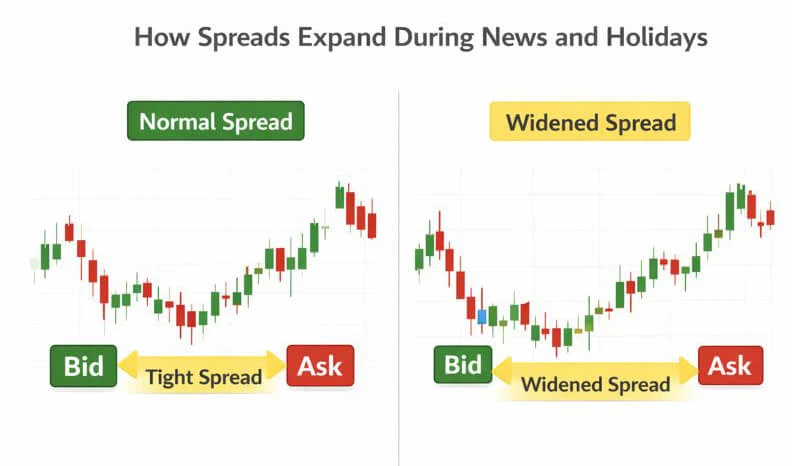
சந்தை இடர் ஸ்பிரெட்களை எவ்வாறு விரிவாக்க வைக்கிறது என்பதை இந்த விளக்கப்படம் காட்டுகிறது.
இது ஏன் இயல்பான சந்தை நடத்தை
இது அல்ல:
❌ தரகர் கையாளுதல்
❌ விலை பிழை
❌ தளத்தின் செயலிழப்பு
இது:
✅ உலகளாவிய பணப்புழக்க இடர் மேலாண்மை
✅ நிலையான சந்தை விலை நிர்ணயம்
✅ அனைத்து தொழில்முறை சந்தைகளும் எவ்வாறு செயல்படுகின்றன
பங்குகள், ஃபியூச்சர்ஸ், ஃபாரக்ஸ் மற்றும் கிரிப்டோ அனைத்தும் இதே வழியில் செயல்படுகின்றன.
இது வர்த்தகர்களுக்கு ஏன் முக்கியமானது
ஸ்பிரெட் விரிவாக்கத்தைப் புரிந்துகொள்வது வர்த்தகர்களுக்கு உதவுகிறது:
- ஆபத்தான தருணங்களில் வர்த்தகம் செய்வதைத் தவிர்க்க
- யதார்த்தமான ஸ்டாப் லாஸ்களை வைக்க
- செலவுகளை நிர்வகிக்க
- ஆச்சரிய செயல்படுத்தல்களைத் தடுக்க
செய்தியின் போது திடீர் ஸ்டாப் லாஸ் தூண்டல்களில் பெரும்பாலானவை ஸ்பிரெட் விரிவாக்கத்தால் ஏற்படுகின்றன.
எனது ஆர்டர் ஏன் நிராகரிக்கப்பட்டது அல்லது ஏற்கப்படவில்லை?
திரும்பிச் செல்லவும் திரும்பிச் செல்லவும்